Over 1.8 million UK homes now have solar panels, and that number is growing by more than 10% every year. Yet most people, even those seriously considering going solar, couldn't explain in plain English exactly how the technology works. This guide fixes that. No engineering degree required. We'll walk you through what happens from the moment sunlight hits your roof to the moment it powers your kettle.
1. What Is a Solar Panel? (The Simple Version)
A solar panel, technically called a photovoltaic (PV) panel, converts sunlight directly into electricity. 'Photovoltaic' comes from the Greek for light (photo) and the name of the Italian physicist Alessandro Volta (voltaic). Put simply: light in, electricity out.
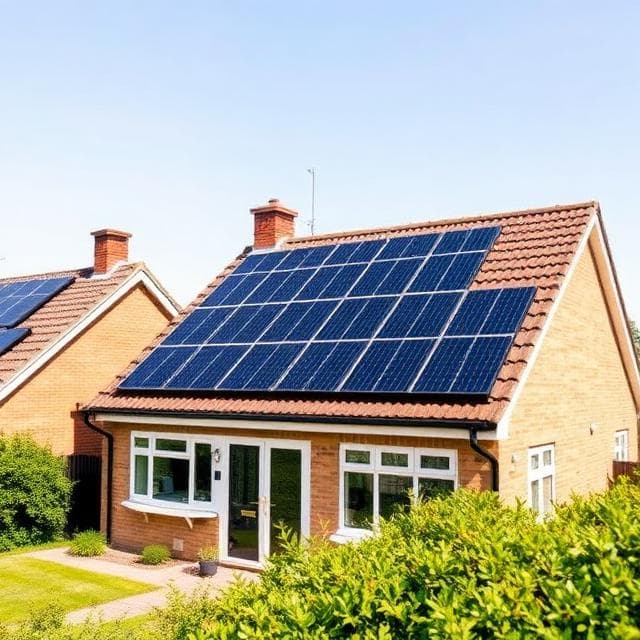
A standard UK home solar system uses 6–14 panels, covering between 15 and 28 square metres of roof. System size is measured in kilowatt peak (kWp), the maximum output the system can produce under ideal conditions. Most UK homes use systems between 3 kWp and 5 kWp.
Solar panels have no moving parts, need minimal maintenance and typically carry a 25-year performance warranty. They are one of the most durable and reliable technologies you can install in a home.
2. How Do Solar Panels Generate Electricity?
The PV cell: where it all starts
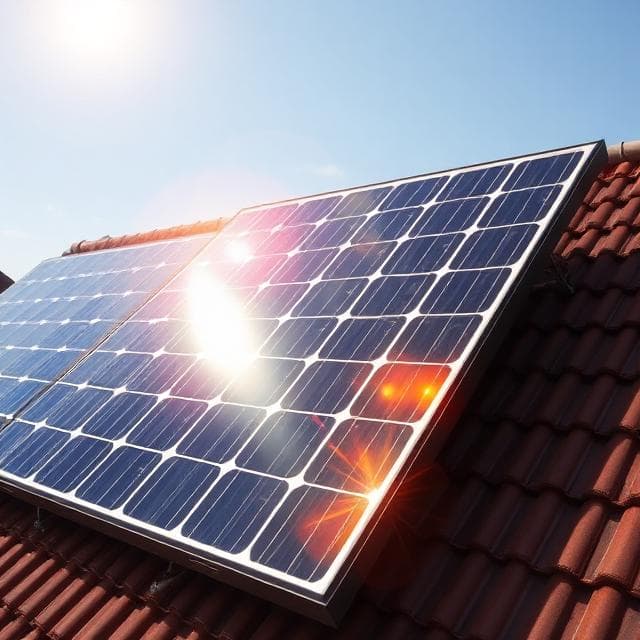
Each solar panel contains dozens of photovoltaic cells made from layers of silicon, a naturally occurring semiconducting material. When light hits the silicon, it transfers energy to electrons within the material, causing them to move. This movement of electrons creates an electric current, known as the photovoltaic effect.
This process was first observed by French physicist Edmond Becquerel in 1839. The same principle that powers satellites, spacecraft and calculators now powers over a million UK rooftops.
DC electricity: the raw output
The current produced by PV cells is direct current (DC), with electrons flowing continuously in one direction. Standard household appliances run on alternating current (AC), where the direction of flow reverses many times per second. DC electricity from the panels, therefore, cannot power your home directly. This is where the inverter comes in.
Light, not heat
PV cells respond to light, not heat. On a clear spring morning with cool, crisp air, panels often outperform a hot, hazy summer afternoon. The UK climate is well-suited to solar energy.
3. What Does a Solar Inverter Do?
The inverter is the operational centre of your solar system. Its primary job is to convert DC electricity from your panels into AC electricity that powers every appliance in your home, from your fridge to your phone charger.
Modern inverters also actively manage energy flow across the whole system. They determine, in real time, whether to power your home from solar panels, draw from the battery, export surplus to the grid or import from the grid, all without any action from you.
Emerald Solar installs SolaX premium inverters as part of its all-inclusive system, fitted in your loft, garage or utility room on installation day. Inverters typically last 10–15 years. Under Emerald Solar's Solar Plan, inverter replacement is covered within the 25-year maintenance and replacement package, with no unexpected bills.
4. Do Solar Panels Work on Cloudy Days?
Yes, and this is the single most common misconception about solar energy in the UK.
Solar panels respond to light (specifically, photons), not direct sunshine or heat. On a bright overcast day, panels typically produce 50–80% of their peak output. Even on a heavily overcast winter day, they still generate 10–25%, enough to meaningfully offset your grid consumption.
The UK receives enough annual sunlight in every region to make solar a financially sound investment. Southern England generates approximately 20% more energy per year than Scotland, but even Scottish homeowners see consistent savings.
What does have a significant impact is shading. Trees, chimneys, dormer windows or adjacent buildings can reduce output substantially if they cast a shadow across panels during peak generation hours. Emerald Solar's free survey measures actual shading at your property throughout the day and across seasons. Where shading is unavoidable, optimisers can be fitted, devices that allow each panel to operate independently, so one shaded panel doesn't drag down the performance of the whole system.
5. What Happens to Solar Energy at Night?
Solar panels do not generate electricity at night. Without light, the photovoltaic effect doesn't occur.
Without a battery, your home automatically switches to grid electricity after sunset. Any surplus energy your panels generated during the day but didn't use is exported to the National Grid. Under the Smart Export Guarantee (SEG), your energy supplier pays you for every unit exported, typically between 6p and 30p per kWh.
With a battery, the picture changes significantly. Surplus solar energy generated during the day is stored rather than exported, and then used to power your home through the evening and overnight. For most households, a well-sized battery means the transition from solar to stored energy to the grid (when needed) is seamless and invisible.
6. How Does Solar Battery Storage Work?
A solar battery stores the DC electricity generated by your panels during daylight hours, making it available to use whenever you need it, day or night.
The battery connects to your inverter, which manages the charge and discharge cycle automatically. During the day, once your home's immediate energy needs are met, surplus solar electricity charges the battery. In the evening, the inverter switches to the battery. When the battery is depleted, it draws from the grid as a backup.
Without a battery, most UK households self-consume around 30% of the solar energy they generate (the rest is exported). With a battery, self-consumption typically rises to 70–80% or higher. Every unit consumed from your own battery saves you from buying electricity from the grid at the current rate of approximately 25p per kWh.
Typical residential battery capacity for a UK home: 9–10 kWh. Battery lifespan is typically 10–15 years. Under Emerald Solar's Solar Plan, battery replacement is included in the 25-year maintenance cover.
7. How Does the Emerald Solar Monitoring App Work?
One of the features that sets Emerald Solar apart from a standard installation is the real-time monitoring app included with every system.
Set up during the installation day handover, the app gives you a live dashboard showing: how much electricity your panels are currently generating, the charge level of your battery, how much energy your home is consuming in real time, and whether you're currently importing from or exporting to the grid.
This level of visibility transforms your relationship with energy. Rather than a mysterious utility bill at the end of the month, you can see exactly what your solar system is doing at any moment, from your phone. Hometree Finance also monitors your system's performance throughout the Solar Plan. If output drops below expected levels, the issue is automatically flagged.
8. How Does EPVS Validate Your Solar Savings?
EPVS, the Energy Performance Validation Scheme, is an independent UK organisation that verifies the accuracy of solar system designs and savings projections.
Before you commit to an Emerald Solar installation, your custom system design is submitted to EPVS for independent validation. This process confirms that the projected annual energy generation, bill savings and export income are realistic and achievable for your specific property, including your roof orientation, local sunlight levels, usage patterns and system specification.
The result: the numbers you're shown are not marketing estimates. They're independently verified figures you can rely on when making your decision. Combined with MCS-certified installation, EPVS validation gives you a level of transparency and assurance that most solar installers simply don't offer.
9. FAQs: How Solar Panels Work
How do solar panels generate electricity?
Solar panels generate electricity through the photovoltaic effect. PV cells in each panel are made from silicon. When light hits the silicon, it energises electrons and creates a direct current (DC) of electricity. An inverter then converts this into alternating current (AC), which powers standard household appliances.
Do solar panels work on cloudy days in the UK?
Yes. Solar panels respond to light (photons), not direct sunshine or heat. On a bright overcast day, panels typically produce 50–80% of their peak output. Even on a heavily overcast day, they generate 10–25%. Shading from chimneys or trees has more impact than cloud cover.
What happens to solar energy at night?
Solar panels don't generate electricity at night. Without a battery, your home switches to grid electricity at sunset, and surplus daytime energy is exported via the Smart Export Guarantee. With a battery, surplus daytime solar is stored and powers your home through the evening and overnight.
How does a solar inverter work?
A solar inverter converts the direct current (DC) electricity produced by your solar panels into alternating current (AC), the standard electricity used by every appliance in your home. It also manages the real-time flow of electricity between panels, the battery and the grid. Inverters are installed in the loft, garage or utility room and last 10–15 years.
10. Ready to See How Solar Could Work for Your Home?
You now understand the technology. The next step is finding out what it would specifically do for your home, including your roof, your energy usage and your location. Emerald Solar's free quote includes an EPVS-validated generation and savings estimate tailored to your property. No commitment. No upfront cost. Just a clear picture of what solar could mean for your bills, before you decide anything. Have a question first? Contact our team and we'll talk you through it.